

GET A FREE CONSULTATION
310-750-4149
$100,000,000+
Recovered for Clients
$21,100,000
Wrongful Death VERDICT
$16,000,000
School Sexual Abuse VERDICT
$12,000,000
Whistleblower Retaliation VERDICT
In a California civil trial, evidence that a party carried liability insurance is inadmissible to prove negligence or other wrongdoing (Evidence Code section 1155), and the sympathetic part of a statement or gesture made to an injured person or the family after an accident is inadmissible as an admission of liability (section 1160). Neither rule is absolute. Insurance can come in when it is part of an admission of fault or shows a witness’s bias, and section 1160 expressly leaves a statement of fault admissible even when it comes wrapped in an apology.
Evidence Code section 1155 is one sentence:
“Evidence that a person was, at the time a harm was suffered by another, insured wholly or partially against loss arising from liability for that harm is inadmissible to prove negligence or other wrongdoing.”
The Law Revision Commission comment says the section codifies existing law, citing Roche v. Llewellyn Iron Works Co. (1903) 140 Cal. 563. (Menefee v. Williams (1968) 259 Cal.App.2d 56, 61.) That matters because most of the case law on insurance at trial predates the Evidence Code and still controls how the rule is applied.
Section 1160 reads in full:
“(a) The portion of statements, writings, or benevolent gestures expressing sympathy or a general sense of benevolence relating to the pain, suffering, or death of a person involved in an accident and made to that person or to the family of that person shall be inadmissible as evidence of an admission of liability in a civil action. A statement of fault, however, which is part of, or in addition to, any of the above shall not be inadmissible pursuant to this section.
“(b) For purposes of this section: (1) ‘Accident’ means an occurrence resulting in injury or death to one or more persons which is not the result of willful action by a party. (2) ‘Benevolent gestures’ means actions which convey a sense of compassion or commiseration emanating from humane impulses. (3) ‘Family’ means the spouse, parent, grandparent, stepmother, stepfather, child, grandchild, brother, sister, half brother, half sister, adopted children of parent, or spouse’s parents of an injured party.”
Read the statute as four questions. If the answer to each is yes, the evidence is out.
The reason for the rule cuts both ways. Insurance evidence “is irrelevant to both the question of liability and the amount of damages,” and evidence or argument “suggesting that the defendant was insured against liability could cause the jury to find liability more readily or to inflate its award of damages in some circumstances.” (Bell, supra, 181 Cal.App.4th at p. 1122.)
No, though the reason is not the text of section 1155, which speaks only of a person who “was … insured.” The rule comes from the Supreme Court’s misconduct cases. In Hoffman v. Brandt (1966) 65 Cal.2d 549, defense counsel told the jury that a $19,000 verdict would send his 69-year-old client, a retired machinist, to a home for the indigent. The defendant was insured. The court held that liability and damages “are to be determined without regard to the defendant’s ability to pay,” and that “knowledge of lack of insurance of a defendant who apparently does not have funds to pay a substantial judgment against him may be a factor in many jurors’ minds in considering the issue of liability in a case where the evidence is closely balanced.” (Id. at p. 554.) It reversed a defense verdict, calling the false implication that there was no insurance “probably of most importance.” (Id. at p. 555.) In a footnote, the court stated the rule both ways: reversal is required, notwithstanding an admonition, “in a closely balanced case where counsel intentionally and improperly brings before the jury the presence or absence of insurance.” (Id. at p. 554, fn. 2.)
The same reasoning reaches public entities, which matters in civil rights and dangerous-condition trials. In Du Jardin v. City of Oxnard (1995) 38 Cal.App.4th 174, defense counsel told the jury to “start counting the public services that will disappear” if the city were held liable. The Court of Appeal held that the argument “intimated that the City had no insurance to cover any damages,” struck “at the heart of the jurors’ pocketbooks,” and was not cured by the trial court’s equivocal response. It reversed a defense verdict. (Id. at pp. 179-180.)
The practical point for plaintiffs: a defense lawyer who pleads poverty for a client, or describes a city’s budget as the source of any award, has made the defendant’s ability to pay an issue. The first response is an objection and a request for a clear admonition, on the record, that the defendant’s ability to pay is not a consideration.
Section 1155 limits a purpose, not a subject. “[T]he existence of insurance may properly be referred to in a case if the evidence is otherwise admissible,” and the trial court then decides under section 352 whether its probative value is substantially outweighed by prejudice. (Staples, supra, 189 Cal.App.3d at pp. 1410-1411.) The purposes that recur:
The limit on the other side is Staples. There, a plaintiff wanted to show a defendant’s insurance to explain the parties’ relationship and answer a charge of collusion. With no admission of fault in the picture, the trial court “retained its traditional discretion under Evidence Code section 352 to preclude evidence of insurance coverage,” and exclusion was upheld. (Staples, supra, 189 Cal.App.3d at pp. 1411-1412.) So the strongest position for admission is a statement by the party itself, admitting fault, where the insurance reference cannot be cut out without changing the meaning. Brainard suggested that “some statements containing reference to insurance … can be edited and the prejudicial words eliminated without destroying the probative value of the remark,” but held that editing would have destroyed the statement in that case. (Brainard, supra, 59 Cal.App.3d 790, fn. 5.) Expect the opponent to propose a redaction; the answer is to show why the insurance words are the point.
Carefully, if at all. The question whether a prospective juror works for or owns stock in an insurance company has a real purpose, exploring “a possible financial interest which could produce a defense minded jury” (Traxler v. Thompson (1970) 4 Cal.App.3d 278, 281, fn. 1), and a real cost: it tells the panel the defendant is insured. The published decisions are old and do not agree. Hart v. Wielt (1970) 4 Cal.App.3d 224, 230, allowed one good-faith question that did not “unnecessarily convey the impression that defendant is in fact insured”; Scally v. Pacific Gas & Electric Co. (1972) 23 Cal.App.3d 806, 813-814, called any such question improper where no insurer is a party.
What the cases agree on is the line that produces reversals: questioning repeated across the panel and pointed at who will pay (Traxler, at pp. 281-282; Swift v. Winkler (1957) 148 Cal.App.2d 927, 932-933). The safe course is to ask about occupations generally, which surfaces claims and insurance work without naming a carrier.
Most of the time, an admonition. The Supreme Court presumes that jurors follow instructions “[a]bsent some contrary indication in the record.” (Cassim v. Allstate Ins. Co. (2004) 33 Cal.4th 780, 803-804.) Attorney misconduct justifies reversal or a new trial only if it is “reasonably probable” the complaining party would otherwise have done better, which means “a reasonable chance, more than an abstract possibility.” (Id. at pp. 800, 801-802.) The cases sort into three groups.
Preserve the point. To raise misconduct in front of the jury, a party must object and “move for a mistrial or seek a curative admonition,” unless the misconduct is so persistent that an admonition would not cure it. (Cassim, supra, 33 Cal.4th at pp. 794-795, quoting Neumann v. Bishop (1976) 59 Cal.App.3d 451, 468.) Hart shows the cost of silence: the defense did not object to the voir dire question or to the cross-examination of its investigator, and lost the appeal. The admonition itself should be specific. Hoffman and Du Jardin both turned in part on an “equivocal” response from the bench that left the jury thinking the argument was fair.
Whether to ask for a mistrial is a judgment call about the case, not the rule. A mistrial costs months. A lawyer who thinks the jury is going well usually takes the admonition, makes the record, and keeps the issue for a new trial motion if the verdict goes wrong. A lawyer facing a second or third deliberate reference has the Hoffman footnote: in a close case, intentional injection of insurance or its absence requires reversal notwithstanding an admonition.
Part of it may be. Section 1160 protects “[t]he portion” of a statement, writing or gesture that expresses “sympathy or a general sense of benevolence relating to the pain, suffering, or death” of the injured person. The rest of the statement is not protected by section 1160, and “[a] statement of fault … which is part of, or in addition to, any of the above shall not be inadmissible pursuant to this section.” Offered against the person who said it, the fault portion is a party admission. (Evid. Code, § 1220.)
The section works by splitting the sentence:
| Said to the injured person or family | Under section 1160 |
|---|---|
| “I’m so sorry you’re hurt.” | Out as an admission of liability. Sympathy about pain or suffering. |
| “I’m sorry, I didn’t see you.” | “Sorry” is out. “I didn’t see you” is a statement of fault and is not protected by section 1160. |
| “I’m sorry. I was looking at my phone.” | The second sentence is a statement “in addition to” the sympathy and is not protected. |
| Flowers, a card, a hospital visit | “Benevolent gestures”: “actions which convey a sense of compassion or commiseration emanating from humane impulses.” |
| “I’m sorry. My insurance will take care of everything.” | “Sorry” is out under section 1160. The insurance remark raises section 1155 and, as a promise to pay, section 1152. |
Read the limits in the text before relying on the section.
The last limit matters in police and other force cases. Section 1160 reaches only occurrences that are not “the result of willful action by a party.” When an officer or guard who used force on someone later expresses sympathy to that person or the family, a defendant invoking section 1160 has to fit the occurrence within that definition, and a plaintiff offering the statement will point to it. If the statute does not apply, the statement is treated like any other party statement, subject to relevance and section 352.
Then two sections apply to different parts of the same conversation. Section 1160 covers the sympathy. Section 1152 covers money, things, acts or services furnished or offered “in compromise or from humanitarian motives,” along with conduct and statements made in negotiating them. “I’m sorry you’re hurt, and we’ll pay the ambulance bill” is protected by both. A statement of fault made in the same conversation is outside section 1160, and whether section 1152 protects it depends on whether it was made in negotiating the offer. That analysis, and the cases on “independent” statements of fact, are in the section 1152 and 1154 guide.
A defendant’s statement that mentions insurance. The plaintiff offers it as a party admission. The defendant argues section 1155 and asks the court to exclude it or strike the insurance words. The plaintiff’s best case is Brainard: the statement admits fault, or shows a motive to lie, and the insurance reference is what gives it meaning. The defendant’s best case is Menefee: a bare reference to coverage is not an admission of anything, and in a close case its prejudice outweighs its value. Which side wins usually depends on whether the statement admits fault on its own terms.
A witness tied to the insurer. The cross-examiner wants the jury to know that a defense investigator or other witness works, or worked, for the carrier. The argument for admission is Hart and Moniz: interest and bias “may always be brought out on cross-examination” even if insurance is disclosed. The opponent’s best argument is section 352, with Staples as the example of a court using it to keep insurance out: if the bias can be shown without the insurer’s name, the name adds prejudice and little else. The cross-examiner should be ready to explain why the insurance connection itself, and not just the fact that the defense hired the witness, is the source of the bias.
Ability to pay in argument. Plaintiffs object the moment the defense pleads poverty, describes a judgment as falling on the taxpayers, or says a verdict would ruin the client. Hoffman and Du Jardin are the authority. The defense response is Cassim: brief, indirect, isolated remarks are usually harmless, and a clear instruction cures them. The same rules bind plaintiffs: a request that the jury think about who will really pay is the mirror image of the argument reversed in Hoffman.
The apology at the scene. The defense moves to exclude everything the driver said to the plaintiff after the crash. The plaintiff’s answer is the second sentence of section 1160(a): only the sympathetic portion is protected, so the motion should be granted only as to that portion, with the statement of fault left in. If the statement was made to someone outside the defined “family,” the plaintiff argues section 1160 does not apply at all.
| Point | California | Federal |
|---|---|---|
| Insurance to prove fault | Inadmissible “to prove negligence or other wrongdoing.” § 1155. | Inadmissible “to prove whether the person acted negligently or otherwise wrongfully.” Rule 411. |
| Absence of insurance | Not in the text. Treated as misconduct (Hoffman; Du Jardin). | In the text: a person “was or was not insured.” |
| Other purposes | No list in the statute. Case law: bias, admissions of fault, ownership or employment; then § 352. | Listed: “proving a witness’s bias or prejudice or proving agency, ownership, or control.” |
| Payment of medical bills | § 1152: anything furnished “in compromise or from humanitarian motives,” plus conduct and statements in negotiating it. | Rule 409: “medical, hospital, or similar expenses” only. The Advisory Committee Note says it “does not extend to conduct or statements not a part of the act of furnishing or offering or promising to pay.” |
| Apology or sympathy | § 1160 protects the sympathetic portion; a statement of fault is not protected. | No counterpart rule. The admissibility fight is relevance and Rule 403. |
For a civil rights case in federal court, the gap on apologies is the one to watch. An officer’s “I’m sorry” that would be partly protected in state court has no apology rule behind it under the Federal Rules of Evidence.
More trial rules are in the California Evidence Code guide.
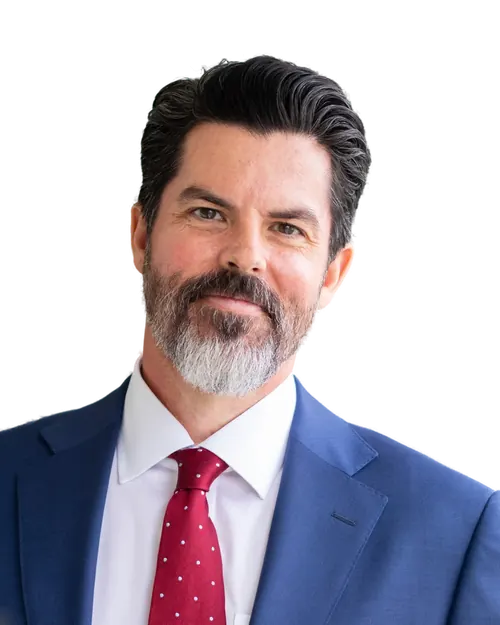
David Gammill is a California trial lawyer who served seven years as a Los Angeles County Deputy District Attorney and has tried more than 100 cases to verdict. He represents injured people in the South Bay and across Los Angeles County. State Bar of California No. 258286.
Insurance or an apology in the evidence at your trial? Gammill Law accepts trial referrals and co-counsel arrangements from other attorneys. See For Attorneys, contact us, or call 310-750-4149.
This page is general information for lawyers, not legal advice, and it does not create an attorney-client relationship. Verify all authority independently before relying on it in any filing.
Free Case Review 1
This site is protected by reCAPTCHA and the Google Privacy Policy and Terms of Service apply.
