

GET A FREE CONSULTATION
310-750-4149
$100,000,000+
Recovered for Clients
$21,100,000
Wrongful Death VERDICT
$16,000,000
School Sexual Abuse VERDICT
$12,000,000
Whistleblower Retaliation VERDICT
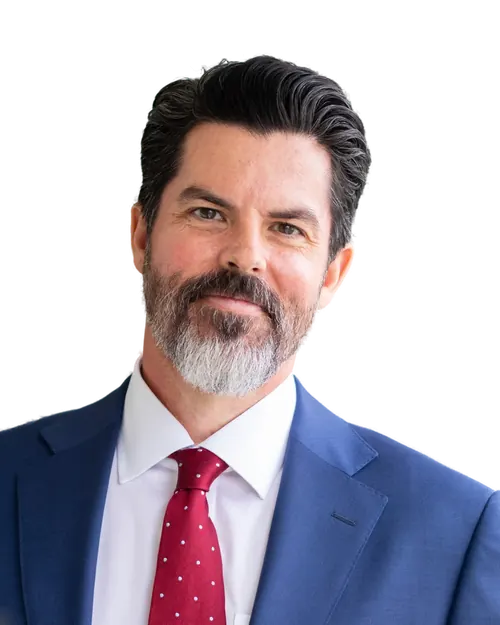
Reviewed by David Gammill, California trial attorney · Last reviewed: October 31, 2026
Yes. You can change your personal injury lawyer in California, even after signing a contingency fee agreement. California recognizes your right to discharge your attorney with or without cause; you do not have to prove malpractice to choose different representation (Fracasse v. Brent, 6 Cal.3d 784, 790–792).
Call 310-750-4149 for a free second opinion on a case another firm is handling. You do not have to decide to switch before you call.
The important question is how to make the change while protecting your case. Before ending the relationship, get a second opinion about your deadlines, your existing fee agreement, and whether another lawyer is prepared to take over.
Gammill Law offers free consultations for people with questions about a lawyer they have already hired or an agreement they have already signed (Gammill Law’s lawyer-selection guide).
Start with a clear picture of what is happening, not just what you fear might be happening. Write down your concerns and ask for direct answers to these questions:
California lawyers must keep clients reasonably informed about significant developments and explain matters sufficiently to permit informed decisions (California Rules of Professional Conduct, rule 1.4). Use those questions to decide whether you need a better explanation, a better communication plan, or different representation.
Consider an independent review if you repeatedly cannot get meaningful answers, do not understand the strategy, or feel pressured to make a decision without enough information. Those concerns are reasons to ask questions, not proof that your lawyer has done something wrong.
A second opinion should not be a competition to promise the largest recovery. Look for an explanation of the strengths, weaknesses, practical options, and work still required.
Changing lawyers does not automatically mean you owe two full contingency fees. Under Fracasse, a lawyer discharged before the contingency occurs is generally limited to the reasonable value of services performed before discharge, rather than automatically receiving the full contractual percentage (Fracasse v. Brent, 6 Cal.3d 784, 791–792).
That does not make the old lawyer’s work disappear or establish your new lawyer’s terms. Have the incoming attorney review both agreements and explain, in writing, how any former-attorney fee claim will be handled before you commit.
The legal term for the reasonable value of services is “quantum meruit,” and under Fracasse a discharged contingency lawyer’s compensation claim generally does not accrue until the agreed contingency occurs, such as a recovery by settlement or judgment (Fracasse v. Brent, 6 Cal.3d 784, 791–792). Ask the reviewing attorney how that rule applies to the work completed and the circumstances of your case.
A contractual lien securing the former lawyer’s reasonable fee can survive discharge (Weiss v. Marcus, 51 Cal.App.3d 590, 598–599). Ask whether a lien has been asserted, what supports it, and how it will be addressed.
California’s contingency-fee statute requires the written agreement to explain how case costs and disbursements affect the fee and the client’s recovery (Business and Professions Code § 6147(a)(2)). Do not treat “no attorney fee unless there is a recovery” as a complete answer to what happens to expenses.
Before signing with a new firm, ask:
The goal is a written explanation you can understand, not reassurance that “the lawyers will work it out.” Do not assume your total fee will stay unchanged unless the proposed arrangement establishes that.
Start by asking a prospective replacement attorney to review the situation before you send a termination notice. Request a transition plan that addresses the following:
For a California state-court civil case, the usual consensual substitution uses Form MC-050, signed by the client, outgoing lawyer, and incoming lawyer and then served and filed (California Courts’ substitution-of-attorney guide). Code of Civil Procedure § 284 also provides for a change by court order after notice, so a missing signature does not mean you are permanently stuck with the same attorney (Code of Civil Procedure § 284).
Ask the incoming lawyer which procedure applies to your case. Do not assume that signing a new retainer alone completes every court requirement.
Upon termination, California’s rules require prompt release of requested client materials and property, whether or not the client has paid for them, subject to applicable protective orders, nondisclosure agreements, statutes, or regulations (California Rules of Professional Conduct, rule 1.16(e)(1)). The rule includes materials such as correspondence, pleadings, deposition transcripts, expert reports, exhibits, and physical evidence (rule 1.16(e)(1)).
Ask for the transfer in writing and identify where the materials should go. If a deadline is approaching, ask the incoming lawyer to identify the documents needed most urgently rather than waiting for every part of the file.
A pending lawsuit does not eliminate your ability to change counsel, but the change must follow the applicable procedure (Code of Civil Procedure § 284). Tell the reviewing lawyer about the court, case number, trial date, and all known hearings or deadlines at the first conversation.
A new lawyer does not automatically mean a new trial date. California’s trial-continuance rule requires a showing of good cause and specifically treats substitution of trial counsel as a potential ground only when the substitution is required in the interests of justice (California Rules of Court, rule 3.1332(c)(4)).
Ask whether the prospective lawyer can prepare within the existing schedule and what would happen if a requested extension were denied. Do not plan a transition on the assumption that the judge will grant more time.
Your lawyer must abide by your decision whether to settle the matter (California Rules of Professional Conduct, rule 1.2(a)). Before deciding, ask for a clear explanation of the offer, the likely net recovery, and the risks of continuing.
A recommendation you dislike deserves examination, not an automatic conclusion that the lawyer is underselling your case. Ask the second lawyer to assess the evidence and reasoning rather than simply supply a higher number.
If you have already accepted an offer, signed settlement documents, or received settlement funds, disclose that immediately. Do not assume changing attorneys will undo an agreement; have the reviewing lawyer evaluate the documents and timing.
Gather what you already have, and make a short list of what is missing. Start with these items:
If an offer or deadline is approaching, lead with the date. Ask for a secure way to provide records rather than sending an entire medical or litigation file through a general website form.
Gammill Law Accident & Injury Lawyers is based in Torrance and represents injured people and families across California.
If you are questioning your current representation, start with the case, the concern, and the next deadline. Ask whether Gammill Law can review your situation and whether a change of counsel is worth exploring.
Call 310-750-4149 for a free consultation. You do not have to decide whether to switch before asking for a second opinion.
Our guides to how no-win, no-fee agreements work in California and what a personal injury lawyer costs explain the agreement a new firm will ask you to sign.
David Gammill is a former Los Angeles County Deputy District Attorney who has tried over 100 cases to verdict, first as a prosecutor and then as a trial lawyer for injured people. Every case is different, and past results do not guarantee a similar outcome. Gammill Law Accident & Injury Lawyers represents people in personal injury, wrongful death, and civil rights cases across California, and its attorneys bring more than 40 years of combined legal experience to every case they take. The firm has recovered more than $100 million for California clients across verdicts and settlements. Its results include a $21.1 million wrongful death verdict, a $16 million school sexual abuse verdict, and a $12 million whistleblower retaliation verdict; every case is different, and prior results do not guarantee a similar outcome. David is also brought in as trial counsel on cases that another firm started. You can read more on our case results page. Consultations are free, there is no fee unless the firm recovers, and the firm takes calls in English and Spanish. Call 310-750-4149 or request a free case evaluation.
This page is attorney advertising and general information, not legal advice for any specific situation. Deadlines and outcomes are fact-specific; consult a licensed California attorney about your own circumstances. Prior results do not guarantee a similar outcome.
Free Case Review 1
This site is protected by reCAPTCHA and the Google Privacy Policy and Terms of Service apply.
