

GET A FREE CONSULTATION
310-750-4149
$100,000,000+
Recovered for Clients
$21,100,000
Wrongful Death VERDICT
$16,000,000
School Sexual Abuse VERDICT
$12,000,000
Whistleblower Retaliation VERDICT
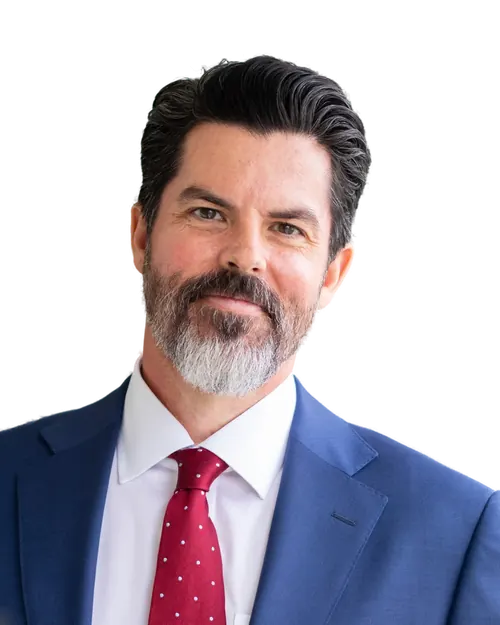
Reviewed by David Gammill, California trial attorney · Last reviewed: October 31, 2026
Do not choose your injury lawyer because you recognize the face on a billboard. Choose the lawyer who can explain who will handle your case, how it will be evaluated, and what happens if the insurance company will not make an acceptable offer.
If you are choosing a lawyer, or questioning one you already hired, call 310-750-4149. The conversation is free, and we will answer the questions on this page about our own firm.
The concern is not the advertisement itself. It is whether the practice behind it is built to investigate your individual claim or move your file toward the next settlement.
Stanford law professor Nora Freeman Engstrom uses “settlement mills” to describe high-volume personal injury practices that advertise aggressively and mass-produce claim resolutions, typically with little client interaction and little litigation. Her research distinguishes this business model from conventional, individualized personal injury representation. (Stanford Law School)
A billboard is not a diagnosis, and a large staff is not a verdict on the quality of representation. The questions to ask are about the work: who exercises legal judgment, how much attention your claim receives, and whether the firm has a credible plan beyond accepting an insurer’s offer.
Do not confuse a familiar name with an informed hiring decision. Before signing, ask to speak with the lawyer responsible for your case, not just the person responsible for signing you up.
Engstrom’s research describes settlement-mill negotiations driven by established “going rates” from past settlements rather than the individualized assessments that would matter if a case were headed toward trial. The research also recognizes that this system can benefit some people with minor injuries or questionable claims, while identifying seriously injured people with meritorious claims as least likely to benefit. (Stanford Law School)
The practical question is simple: “What makes my case different, and how have you accounted for it?” Ask the lawyer to explain the evidence, the weaknesses, the losses being claimed, and the information still needed before recommending a resolution.
Limited client interaction and substantial delegation to nonlawyer staff are among the characteristics described in Engstrom’s study of settlement mills. That is a description of the practices studied, not a finding about every firm that advertises. (Stanford Law School)
Do not make “Will a case manager help?” your only screening question. Ask who makes the legal decisions, who explains settlement recommendations, and how you reach that attorney when an important question arises.
Before accepting a recommendation, ask why this amount makes sense for your case. Request an explanation of the alternatives, the risks of continuing, and the estimated amount you would receive after fees, costs, and any obligations to be paid from the recovery.
Do not confuse candid advice with pressure. A lawyer who explains why a disappointing offer may still be sensible is giving you something to evaluate; “just sign it” is not an explanation.
Engstrom’s research describes settlement mills that rarely file lawsuits or take claims to trial. That makes the firm’s plan for an unresolved claim a useful subject to discuss before hiring. (Stanford Law School)
Ask whether the firm would litigate your case itself, involve another lawyer, refer it elsewhere, or reconsider the representation. Ask who would actually try it and what comparable civil cases that lawyer has personally taken to verdict.
In August 2026, The Atlanta Journal-Constitution reported that Robert Wyrosdick received an approximately $4.3 million arbitration award against Morgan & Morgan and the former firm attorney who handled his collision case. Wyrosdick alleged that his injury lawsuit had been settled for $45,000 without his permission, while the firm maintained that he had verbally consented. (AJC reporting)
According to the AJC, the arbitrator granted claims for legal malpractice, breach of contract, and breach of fiduciary duty, and the award included $3.15 million in punitive damages. The article reported that Wyrosdick had been paid, while Morgan & Morgan’s CEO said the firm strongly disagreed with the findings and rejected the suggestion that the case reflected a wider problem. (AJC reporting)
The distinction matters: this was an arbitration award in a dispute with the lawyers, not a $4.3 million verdict valuing the original accident claim. The AJC also reported that the arbitrator was not tasked with explaining her findings, so the award should not be treated as proof of every broader allegation about the firm’s business model. (AJC reporting)
The consumer lesson is not to decide every other client’s experience from one case. It is to ask, before hiring, how the firm communicates offers, records settlement authority, and handles disagreements with its own clients.
The Georgia dispute does not establish California law; California has its own professional-conduct rules governing settlement authority and communication. Rule 1.2 says a lawyer must abide by the client’s decision whether to settle, while its commentary recognizes that a client can give specific advance authorization and can revoke that authority. (State Bar of California, Rule 1.2 and comment 2)
Rule 1.4 requires lawyers to keep clients reasonably informed about significant developments and explain matters enough to permit informed decisions. Rule 1.4.1 requires prompt communication of the amounts, terms, and conditions of written settlement offers in civil matters; its commentary also addresses oral offers that are significant developments. (State Bar of California, Rules 1.4 and 1.4.1)
Before signing a representation agreement, ask what settlement authority you are granting and how later instructions will be documented. Also ask the lawyer to identify any provision governing disputes between you and the firm, including arbitration, and explain what it means.
Use these questions to move the conversation away from slogans and toward the work. Ask the same questions of a small firm, including ours.
Do not expect a guaranteed recovery or a complete valuation at the first meeting. Look for specific answers, a willingness to explain uncertainty, and a clear account of who is accountable to you.
Gammill Law Accident & Injury Lawyers is a Torrance plaintiff’s trial firm representing people in personal injury, wrongful death, and civil rights matters across the South Bay and California. (About Gammill Law)
Ask us who would handle your case, what comparable civil trial experience is relevant, and what we would need to investigate before recommending a course of action.
For the broader hiring checklist, read How to Choose the Right Personal Injury Lawyer in California. Use both guides to compare answers, not advertising budgets.
Gammill Law offers free consultations at 310-750-4149. If you are deciding whom to hire, bring your questions and ask us to explain how we would approach your situation.
Our guides to how no-win, no-fee agreements work in California and what a personal injury lawyer costs explain the agreement you will be asked to sign. If you have already hired a firm and are reconsidering, our guide to changing your personal injury lawyer in California explains the fee rules, your file, and the court paperwork.
David Gammill is a former Los Angeles County Deputy District Attorney who has tried over 100 cases to verdict, first as a prosecutor and then as a trial lawyer for injured people. Every case is different, and past results do not guarantee a similar outcome. Gammill Law Accident & Injury Lawyers represents people in personal injury, wrongful death, and civil rights cases across California, and its attorneys bring more than 40 years of combined legal experience to every case they take. The firm has recovered more than $100 million for California clients across verdicts and settlements. Its results include a $21.1 million wrongful death verdict, a $16 million school sexual abuse verdict, and a $12 million whistleblower retaliation verdict; every case is different, and prior results do not guarantee a similar outcome. You can read more on our case results page. Consultations are free, there is no fee unless the firm recovers, and the firm takes calls in English and Spanish. Call 310-750-4149 or request a free case evaluation.
This page is attorney advertising and general information, not legal advice for any specific situation. Deadlines and outcomes are fact-specific; consult a licensed California attorney about your own circumstances. Prior results do not guarantee a similar outcome.
Free Case Review 1
This site is protected by reCAPTCHA and the Google Privacy Policy and Terms of Service apply.
