

GET A FREE CONSULTATION
360-392-2808
When a car hits a motorcycle, the insurance company’s first move is to blame the rider. The adjuster assumes you were speeding or weaving, and counts on a jury assuming it too. The law does not assume anything. A rider has the same rights on the road as any driver, and the question in your case is the same as in any other: who failed to look, yield or stop.
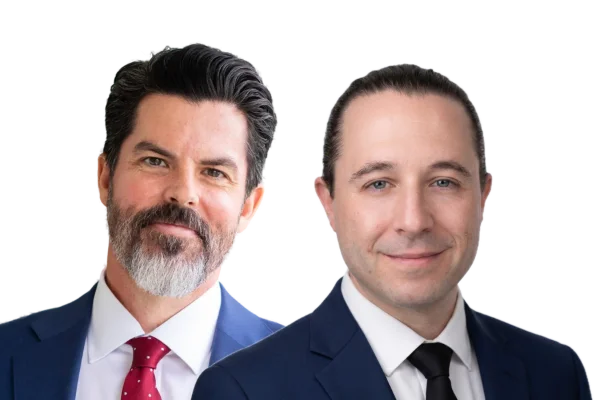
Gammill Law is a trial firm with an office in downtown Bellingham at 114 W Magnolia Street. Zack Muljat, a Washington lawyer whose practice centers on wrongful death and catastrophic injury, runs the office and is the lawyer of record on our Washington cases. The firm was founded by David Gammill, who has tried more than 100 cases to verdict, and it has recovered more than $100 million for its clients in California, where it began.
Call (360) 392-2808. The first conversation is free, and there is no fee unless we win.
The left turn. A driver turns left across your lane at an intersection or into a driveway. This is the classic motorcycle crash, and the driver nearly always says the same thing: “I didn’t see the bike.”
The lane change. A driver moves over without checking the mirror or the blind spot.
The pull-out. A driver leaves a side street or parking lot and misjudges how close you are.
The rear-end. A tap that would dent a bumper throws a rider.
The road. Gravel, a pothole, a raised utility cover or an unmarked edge can put a bike down when a car would not notice. When a government body knew about the hazard and left it, there may be a claim against it.
Riders come to Whatcom County for Chuckanut Drive and the Mount Baker Highway, and they share those roads with drivers who are looking at the view.
Washington law gives a motorcycle full use of a lane and forbids any driver to crowd it (RCW 46.61.608). The same statute bars a rider from passing in the lane a car is occupying, and riding between lanes of traffic is not allowed in Washington. If you were lane splitting when you were hit, expect the insurer to make that the whole case. It is a share of fault to be argued. It is not automatically the end of the claim.
Washington requires auto insurers to offer underinsured motorist coverage, but the statute makes an exception for a person operating or occupying a motorcycle (RCW 48.22.030). Many riders find out after a crash that the coverage on their car does not apply and their motorcycle policy never included it. If you ride, read your motorcycle policy today. If you have already been hit, send it to us and we will read it.
Your recovery is reduced by your share of the fault and nothing more. An insurer that can put 30 percent on you saves 30 percent. This is why the stereotype matters to them, and why evidence matters to you.
Washington requires riders and passengers to wear a helmet on public roads. If you were not wearing one, the insurer will raise it. Washington courts have generally refused to let the lack of protective gear be used against an injured person when it played no part in causing the crash, and we hold the insurer to that.
A motorcycle case is won on physical evidence, because the driver’s story and the rider’s story rarely match and the rider is often too badly hurt to give one.
Do not let the bike be repaired or sold for salvage until it has been examined.
Riders have no shell around them. The usual injuries are broken legs and pelvises, road rash deep enough to need skin grafts, spinal injuries, and brain injuries even with a helmet. Serious trauma in Whatcom County goes to PeaceHealth St. Joseph Medical Center, a Level II trauma center.
These injuries are expensive for years. A claim has to account for the surgery still ahead, the work you cannot go back to, and the riding you may never do again.
Nothing up front. We work on a contingency fee: we are paid only if we win, and the terms are in a written agreement you read before you sign.
No. A driver is required to see what is there to be seen. Not looking is the fault.
Yes. Speed may put some share of the fault on you. The driver who turned across your path still carries theirs.
Your own motorcycle policy, if it has underinsured motorist coverage. Possibly the vehicle owner’s policy or an employer’s, if the driver was working. We look at all of them.
Yes, against the driver at fault, and in some cases against the rider’s policy as well.
Three years for most injury claims in Washington.
Call (360) 392-2808 or send us the details.
Attorney advertising. Prior results do not guarantee a similar outcome.
Free Case Review 1
This site is protected by reCAPTCHA and the Google Privacy Policy and Terms of Service apply.
