

GET A FREE CONSULTATION
310-750-4149
$100,000,000+
Recovered for Clients
$21,100,000
Wrongful Death VERDICT
$16,000,000
School Sexual Abuse VERDICT
$12,000,000
Whistleblower Retaliation VERDICT
Evidence Code section 1250 admits a declarant’s statement of then-existing state of mind, emotion or physical sensation, including pain, intent and plan, when offered to prove that state at a time it is itself in issue or to prove or explain the declarant’s conduct. It does not admit a statement of memory or belief to prove the fact remembered or believed (Evid. Code, § 1250, subd. (b); People v. Whitt (1990) 51 Cal.3d 620, 642-643). California has no general hearsay exception for statements made for medical diagnosis or treatment: section 1253 is limited to statements by a minor victim of child abuse or neglect, made when under 12.
Evidence Code section 1250 reads:
“(a) Subject to Section 1252, evidence of a statement of the declarant’s then existing state of mind, emotion, or physical sensation (including a statement of intent, plan, motive, design, mental feeling, pain, or bodily health) is not made inadmissible by the hearsay rule when: (1) The evidence is offered to prove the declarant’s state of mind, emotion, or physical sensation at that time or at any other time when it is itself an issue in the action; or (2) The evidence is offered to prove or explain acts or conduct of the declarant. (b) This section does not make admissible evidence of a statement of memory or belief to prove the fact remembered or believed.”
Section 1251 reads:
“Subject to Section 1252, evidence of a statement of the declarant’s state of mind, emotion, or physical sensation (including a statement of intent, plan, motive, design, mental feeling, pain, or bodily health) at a time prior to the statement is not made inadmissible by the hearsay rule if: (a) The declarant is unavailable as a witness; and (b) The evidence is offered to prove such prior state of mind, emotion, or physical sensation when it is itself an issue in the action and the evidence is not offered to prove any fact other than such state of mind, emotion, or physical sensation.”
Section 1252 reads:
“Evidence of a statement is inadmissible under this article if the statement was made under circumstances such as to indicate its lack of trustworthiness.”
Section 1253 reads:
“Subject to Section 1252, evidence of a statement is not made inadmissible by the hearsay rule if the statement was made for purposes of medical diagnosis or treatment and describes medical history, or past or present symptoms, pain, or sensations, or the inception or general character of the cause or external source thereof insofar as reasonably pertinent to diagnosis or treatment. This section applies only to a statement made by a victim who is a minor at the time of the proceedings, provided the statement was made when the victim was under the age of 12 describing any act, or attempted act, of child abuse or neglect. ‘Child abuse’ and ‘child neglect,’ for purposes of this section, have the meanings provided in subdivision (c) of Section 1360. In addition, ‘child abuse’ means any act proscribed by Chapter 5 (commencing with Section 281) of Title 9 of Part 1 of the Penal Code committed against a minor.”
The four sections form one article of the Evidence Code. Sections 1250, 1251 and 1253 each open with “Subject to Section 1252,” and section 1252 applies to every statement offered “under this article.”
If the statement passes, it comes in for its truth. Admitted under section 1250, a statement “may be introduced without limitation, subject only to section 352” (Ortiz, 38 Cal.App.4th at p. 389). If it is offered only as circumstantial evidence of state of mind, it is not hearsay, but the other side is entitled on request to an instruction limiting it to that purpose (id. at p. 389; Evid. Code, § 355).
The text names “pain” and “bodily health” in its list of covered states. A plaintiff who says “my back is killing me” to a spouse at dinner, “I can’t lift that, my shoulder’s shot” to a supervisor, or “my neck hurts” to a triage nurse is describing a physical sensation that exists as the words are spoken. When the plaintiff claims damages for pain and suffering, the argument for subdivision (a)(1) is direct: the plaintiff’s physical sensation at that time is itself an issue in the action.
The Supreme Court used this very example in People v. Sanchez (2016) 63 Cal.4th 665, 674-675. An emergency room report “may record the observations made by the writer, along with statements made by the patient.” Each level needs its own exception: “the report itself may be a business record (Evid. Code, § 1270 et seq.), while the patient’s statement may qualify as a statement of the patient’s existing mental or physical state (Evid. Code, § 1250, subd. (a)).” Section 1201 states the same rule for multiple hearsay generally. The chart’s own foundation is covered on our section 1271 business records page.
Where these statements matter most:
Two limits keep this from becoming a parade. First, section 352 still applies (Ortiz, 38 Cal.App.4th at p. 389), and a judge will cut off the fifth witness to say the plaintiff complained of back pain. Pick the witnesses who saw the pain at the times the defense says it did not exist. Second, section 1252 excludes a statement made in circumstances that show it is untrustworthy, discussed below.
Subdivision (b) is the line. A statement about a past event is always, in one sense, a statement of the declarant’s present memory. If that were enough, every narrative would come in. Smith v. Slifer (1969) 1 Cal.App.3d 748, 753, a wrongful death case, quoted the Assembly Committee on Judiciary comment that without subdivision (b) “any statement narrating a past event would be, by a process of circuitous reasoning, admissible to prove that the event occurred.” The Supreme Court put it the same way: “statements recounting past events are an implicit expression of the declarant’s belief or memory that such events occurred, and are inadmissible for their truth under Evidence Code section 1250, subdivision (b)” (Whitt, 51 Cal.3d at p. 643, fn. 13).
In an injury case the problem is the cause narrative. Split the statement:
| Statement | Section 1250? | Why |
|---|---|---|
| “My neck hurts.” | Yes | Then-existing physical sensation. |
| “My neck has hurt since the crash.” | Only “my neck hurts” | “Since the crash” is memory, offered to prove when the pain began. |
| “The truck ran the red light and hit me.” | No | Memory of an event. Look at section 1240 if it was said under the stress of the crash. |
| “My neck hurt all last week.” | No | Past sensation. Section 1251 only, if the declarant is unavailable. |
| “I’m afraid to drive now.” | Yes | Then-existing emotion. |
| “I’m going to physical therapy tomorrow.” | Yes | Then-existing intent, offered to prove later conduct. |
The practical answer to a subdivision (b) objection is to narrow the offer to the sensation and redact or instruct on the rest. A crash narrative said at the scene, while the plaintiff was still under the stress of it, may come in on another theory; see our page on spontaneous statements under section 1240.
There is a second way around the hearsay rule, and it is not section 1250 at all. “[A] statement which does not directly declare a mental state, but is merely circumstantial evidence of that state of mind, is not hearsay” (Ortiz, 38 Cal.App.4th at p. 389). Ortiz gave the example: “I am afraid of John” is hearsay admissible under section 1250 if the declarant’s state of mind is relevant; “John is dangerous” is inadmissible hearsay if offered to prove John is dangerous, but not hearsay if offered only to prove the declarant believed it (id. at pp. 389-390). Either way, the state of mind must be relevant, and the circumstantial use carries a limiting instruction on request.
Yes. Subdivision (a)(2) admits a then-existing statement of intent or plan “to prove or explain acts or conduct of the declarant.” Smith v. Slifer stated the rule in a civil case: “Evidence of a statement of a declarant showing he intends to do an act is admissible in support of an inference he did the act, providing proof of the act is relevant to a material issue in the case” (1 Cal.App.3d at p. 752). The question in Slifer was whether a passenger killed in a crash had paid for her rides, which decided whether she was a guest. Her statements that she meant to pay the driver for the coming week were admissible to show that she did; excluding them was reversible error (id. at pp. 752-753).
The same case shows the limit. Her statement that she “had already paid” for that week was a statement about a past act. Offered to prove the payment had been made, it “might appear to be proscribed by sections 1250, subdivision (b) and 1251” (id. at p. 753). Intent looks forward; memory looks back. Only the first comes in to prove what happened.
Two points on reading the text. The statement must be of the declarant’s own intent, and subdivision (a)(2) speaks of “acts or conduct of the declarant.” And the statement proves only the declarant’s intent and the inference that the declarant acted on it; it is not a vehicle for whatever facts the declarant mentioned along the way.
Section 1251 is the narrow exception for a statement about an earlier state: “my chest hurt all weekend,” “I was terrified the whole time.” It has three conditions, all in the text:
In practice, section 1251 matters when the declarant has died or cannot testify and an earlier state is what the jury must decide. For a plaintiff who will take the stand, it does nothing: the plaintiff is available, so statements about past pain must come in some other way or through the plaintiff’s own testimony. The third condition also means section 1251 never carries a cause narrative. “I’ve been in pain since the fall” can prove the pain, if the other conditions are met, but not the fall.
Section 1252 excludes a statement offered under sections 1250, 1251 or 1253 “if the statement was made under circumstances such as to indicate its lack of trustworthiness.” The Supreme Court asks whether the statements “were made under coercion or ‘with an intent to deceive'” (People v. Wilson (2024) 16 Cal.5th 874, 929-930).
Whitt is the leading example of exclusion. A defendant’s statements in a prison interview about his religious rebirth were then-existing feelings within section 1250, but the trial court could exclude them because he made them while his appeal was pending, when “[p]ublic professions of personal redemption could only benefit” him; “there was ample ground to suspect defendant’s motives and sincerity” (51 Cal.3d at p. 643).
Section 1252 does not reach a statement offered for a nonhearsay purpose: the “trustworthiness inquiry is a limitation on hearsay evidence admitted under a state of mind exception” (Wilson, at p. 929).
Not a general one. Federal Rule of Evidence 803(4) admits, from any declarant, a statement that “is made for—and is reasonably pertinent to—medical diagnosis or treatment” and “describes medical history; past or present symptoms or sensations; their inception; or their general cause.” California’s section 1253 uses nearly the same operative words, then confines them: “This section applies only to a statement made by a victim who is a minor at the time of the proceedings, provided the statement was made when the victim was under the age of 12 describing any act, or attempted act, of child abuse or neglect.”
The Court of Appeal described section 1253 as “a narrower hearsay exception” that “applies in both civil and criminal actions,” and said it “is patterned after rule 803(4) of the Federal Rules of Evidence” (People v. Brodit (1998) 61 Cal.App.4th 1312, 1324, 1331). Within its scope, Brodit read section 1253 the way federal courts read the rule; nothing in it “requires the hearsay statements be made to a licensed physician or psychologist” (id. at p. 1332).
For an adult plaintiff in a car crash, fall or police-force case, then, the history in the chart has no medical-diagnosis exception to ride on. “The pain started when the car hit me,” “I fell on the wet floor” and “the officer slammed my head into the hood” may be medically pertinent, but in a California courtroom pertinence to treatment is not a hearsay exception unless section 1253 applies. Our hearsay exceptions guide and Sanchez page say the same.
In a civil case tried in federal court, the Federal Rules of Evidence apply (Fed. Rules Evid., rule 1101(a), (b)), and Rule 803(4) is available for an adult’s history, including its “general cause.”
There are four routes, and each carries a different part of the history.
1. The physician’s own knowledge. What the doctor saw, measured, diagnosed and did is not hearsay when the doctor says it from the stand. Range of motion, spasm on palpation, the imaging the doctor read and the surgery the doctor performed are the doctor’s own observations.
2. Section 1250, for then-existing symptoms. The patient’s statement of present pain, numbness or fear, offered to prove that condition, fits section 1250. Sanchez used exactly this example (63 Cal.4th at pp. 674-675). If the statement comes through the chart rather than the doctor’s memory, the chart needs its own exception for the writer’s level (§ 1201). The cause narrative and the past history do not ride along.
3. Basis for an opinion, within Sanchez. A physician giving an opinion may rely on the history. “Any expert may still rely on hearsay in forming an opinion, and may tell the jury in general terms that he did so” (Sanchez, 63 Cal.4th at p. 685). What the expert may not do is “relate as true case-specific facts asserted in hearsay statements, unless they are independently proven by competent evidence or are covered by a hearsay exception” (id. at p. 686). The rule applies in civil injury trials (Yaffee v. Skeen (2024) 106 Cal.App.5th 1281, 1317). So the physician may say the opinion rests in part on the patient’s history. The physician may not tell the jury, as fact, that the patient said the pain began the day of the crash, unless that fact is proven another way, usually by the plaintiff testifying to it. The older practice of admitting the history “not for its truth” with a limiting instruction is gone: that paradigm “is no longer tenable because an expert’s testimony regarding the basis for an opinion must be considered for its truth by the jury” (63 Cal.4th at p. 679). For more, see the Sanchez page and, on whether the opinion itself survives, sections 801 and 802.
4. Section 1220, when the defense offers it. “Evidence of a statement is not made inadmissible by the hearsay rule when offered against the declarant in an action to which he is a party” (Evid. Code, § 1220). The plaintiff’s own words in the chart, offered by the defense, need no other exception at the plaintiff’s level: “I’ve had back pain for years,” “I tripped over my own feet,” “I wasn’t wearing a seatbelt.” The chart still needs a foundation for the writer’s level. The exception runs one way. The plaintiff cannot offer the same statements under section 1220, because they are not being offered against the declarant. Statements by employees of a defendant are a separate subject, covered on our sections 1222 to 1224 page.
The cleanest way to avoid all of this is live testimony in the right order. The plaintiff tells the jury when the pain began and what happened. The treating physician then testifies to what the doctor observed and did and gives an opinion on facts already in evidence. The history the physician relied on is no longer case-specific hearsay that needs an exception; it is a fact the jury has heard from the person who knows it.
The defense motion to exclude the plaintiff’s complaints of pain from lay witnesses. The best defense argument is a combination: each witness adds nothing new (§ 352) and the statements are laced with cause narrative (§ 1250, subd. (b)). The best response concedes the cause narrative and limits the offer to the sensation, chooses witnesses by time period rather than volume, and leads with statements made before any claim existed.
The defense motion to keep the medical history out of the plaintiff’s expert’s testimony. The best defense argument is Sanchez at page 686: no exception covers the history in a California court, and section 1253 does not apply to an adult. The best plaintiff response is not to fight about the exception but to prove the facts independently, so that the expert relates nothing the jury has not already heard, and to use section 1250 for any then-existing symptom the expert needs to recount.
The plaintiff’s motion against selective use of the chart. The defense will offer the plaintiff’s statements that help it under section 1220. The plaintiff cannot answer with the helpful statements from the same chart under section 1220. The answer must come from section 1250 for present symptoms, from the plaintiff’s own testimony, or, if the chart is in evidence, from the parts of it the court admits on its own foundation. Think about this before the defense opens the chart, not after.
The wrongful death case. When the declarant has died, section 1251 opens for statements about an earlier state, provided that state is itself in issue and nothing else is being proved. A decedent’s statements of then-existing intent may prove what the decedent did next (Slifer). Neither section carries the decedent’s account of how an accident happened.
| Issue | California | Federal Rules of Evidence |
|---|---|---|
| Then-existing mental, emotional or physical state | § 1250. Must be in issue, or offered to prove or explain the declarant’s conduct. | Rule 803(3). The text lists the state without California’s two purposes. |
| Memory or belief to prove the fact remembered | Excluded (§ 1250, subd. (b)). | Excluded “unless it relates to the validity or terms of the declarant’s will” (Rule 803(3)). |
| Statement about an earlier state | § 1251. Declarant must be unavailable; earlier state must be in issue; nothing else proved. | No general counterpart, but Rule 803(4) covers “past or present symptoms” when made for diagnosis or treatment. |
| Statements for medical diagnosis or treatment | § 1253. Only a minor victim of child abuse or neglect, statement made when under 12. | Rule 803(4). Any declarant, including history, inception and “general cause.” |
| Trustworthiness limit | § 1252 applies to §§ 1250, 1251 and 1253. | No trustworthiness clause in the text of Rule 803(3) or 803(4). |
| Availability of declarant | Immaterial under § 1250 and § 1253; required under § 1251. | Immaterial under all of Rule 803. |
| Party’s own statement offered by opponent | A hearsay exception (§ 1220). | Not hearsay (Rule 801(d)(2)(A)). |
The row that decides cases is the fourth. A lawyer who has tried cases in federal court expects the patient’s history, including how the injury happened, to come in with the chart. In a California courtroom it does not, and the time to learn that is not when the expert is on the stand.
More trial evidence pages are in our California Evidence Code guide.
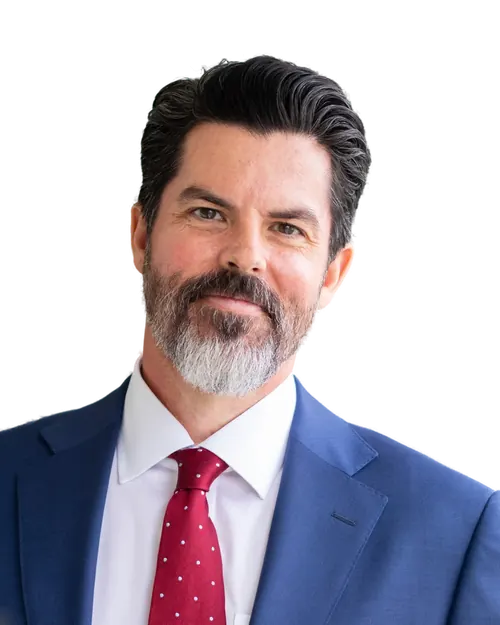
David Gammill is a California trial lawyer who served seven years as a Los Angeles County Deputy District Attorney and has tried more than 100 cases to verdict. He represents injured people in the South Bay and across Los Angeles County. State Bar of California No. 258286.
A pain and suffering case built on what the plaintiff said? Gammill Law accepts trial referrals and co-counsel arrangements from other attorneys. See For Attorneys, contact us, or call 310-750-4149.
This page is general information for lawyers, not legal advice, and it does not create an attorney-client relationship. Verify all authority independently before relying on it in any filing.
Free Case Review 1
This site is protected by reCAPTCHA and the Google Privacy Policy and Terms of Service apply.
