

GET A FREE CONSULTATION
310-750-4149
$100,000,000+
Recovered for Clients
$21,100,000
Wrongful Death VERDICT
$16,000,000
School Sexual Abuse VERDICT
$12,000,000
Whistleblower Retaliation VERDICT
Under Evidence Code sections 801 and 802, a California trial court acts as a gatekeeper and excludes expert opinion that is (1) based on matter of a type on which an expert may not reasonably rely, (2) based on reasons unsupported by the material the expert relies on, or (3) speculative (Sargon Enterprises, Inc. v. University of Southern California (2012) 55 Cal.4th 747, 771-772). The court does not choose between competing experts or weigh persuasiveness. Review is for abuse of discretion, and de novo on a conclusion of law (id. at p. 773).
Evidence Code section 801 reads:
“If a witness is testifying as an expert, his testimony in the form of an opinion is limited to such an opinion as is: (a) Related to a subject that is sufficiently beyond common experience that the opinion of an expert would assist the trier of fact; and (b) Based on matter (including his special knowledge, skill, experience, training, and education) perceived by or personally known to the witness or made known to him at or before the hearing, whether or not admissible, that is of a type that reasonably may be relied upon by an expert in forming an opinion upon the subject to which his testimony relates, unless an expert is precluded by law from using such matter as a basis for his opinion.”
Evidence Code section 802 reads:
“A witness testifying in the form of an opinion may state on direct examination the reasons for his opinion and the matter (including, in the case of an expert, his special knowledge, skill, experience, training, and education) upon which it is based, unless he is precluded by law from using such reasons or matter as a basis for his opinion. The court in its discretion may require that a witness before testifying in the form of an opinion be first examined concerning the matter upon which his opinion is based.”
Section 803 supplies the remedy: the court “may, and upon objection shall, exclude testimony in the form of an opinion that is based in whole or in significant part on matter that is not a proper basis for such an opinion,” and the witness may then state the opinion on whatever proper basis remains. Section 720 governs qualification, which “must be shown before the witness may testify as an expert” if a party objects.
Sargon was a lost-profits case. After an eight-day evidentiary hearing, the trial court excluded an accountant’s projection that a small dental implant company would have become a world market leader, and the Supreme Court affirmed. In order, the questions are:
This half of Sargon belongs to the party defending the opinion. “The trial court’s gatekeeping role does not involve choosing between competing expert opinions.” “The court must not weigh an opinion’s probative value or substitute its own opinion for the expert’s opinion.” The court “does not resolve scientific controversies.” The goal “is simply to exclude ‘clearly invalid and unreliable’ expert opinion” (Sargon, at p. 772). Courts of Appeal have reversed trial judges for:
Abuse of discretion is the stated standard, but the discretion “is not unlimited, especially when … its exercise implicates a party’s ability to present its case” (Sargon, at p. 773). When the ruling ends the case, Courts of Appeal go further: Garner reviewed an in limine exclusion independently because it operated as a nonsuit (98 Cal.App.5th at pp. 673-674), and Brancati v. Cachuma Village, LLC (2023) 96 Cal.App.5th 499 said review “may also” be de novo.
Sargon borrowed from Daubert v. Merrell Dow Pharmaceuticals, Inc. (1993) 509 U.S. 579, 595 the point that the focus “must be solely on principles and methodology, not on the conclusions that they generate.” It did not adopt the federal rule.
Both come from sections 801 and 802, and lawyers file the wrong one. People v. Sanchez (2016) 63 Cal.4th 665, 686 holds that an expert may not “relate as true case-specific facts asserted in hearsay statements, unless they are independently proven by competent evidence or are covered by a hearsay exception.” It does not limit what the expert may rely on. See the Sanchez rule page and Sanchez expert checklist.
| Sargon motion | Sanchez objection | |
|---|---|---|
| Question | Is the opinion admissible at all? | May the expert tell the jury this case-specific fact? |
| Target | The link between basis and conclusion | Case-specific out-of-court statements related as true |
| Remedy | The opinion, or the part resting on the improper basis, is excluded | The recital is excluded. The opinion can still come in. |
| Cure | A reasoned explanation tied to data and proven facts | Prove the fact through a witness or an exception such as business records, or use a hypothetical |
| When it bites | Before the jury hears the opinion | During the testimony, question by question |
| Where they meet | If the facts an expert assumes are never proven, the Sanchez gap becomes a Sargon problem: the opinion rests on “assumptions of fact without evidentiary support.” | |
What the challenge can reach. Qualification for the particular opinion, the kind of material behind it, whether the stated reasons follow from that material, and whether a factual assumption has any evidence under it. Each of these is a question about the expert’s own account of the opinion. The disclosure statute requires the designating party to represent that the expert can give “a meaningful oral deposition concerning the specific testimony, including an opinion and its basis” (Code Civ. Proc., § 2034.260, subd. (c); see §§ 2034.210-2034.300), and the basis the expert gives there is what the court measures the opinion against.
What it cannot reach. Credibility, a disagreement between qualified experts, a dispute within the field, or the weight of a study. Those go to the jury under Sargon itself (55 Cal.4th at p. 772). A challenge that amounts to “our expert is better” is the one Cooper and Garner reversed.
The best argument for exclusion names the step where the expert leaves the material. In Sargon it was circular reasoning about “innovation” and market share. In Onglyza it was treating one study’s association as causation while conceding the finding needed replication. In Atkins it was a career assumed with no evidence that it was likely. The argument is that the material gives no reasonable basis for this particular opinion, and it is strongest when it rests on the expert’s own concessions.
The best argument against exclusion starts with the limits at page 772 and then makes the moving party say where the gap is. If part of the basis is weak, section 803 gives the court a narrower remedy: the expert may state the opinion “after excluding from consideration the matter determined to be improper.” Ask for that before the court reaches the whole opinion.
Building a basis that survives. The opinions that held up share three features. The expert explained the path from data to conclusion (Yaffee). The expert considered and ruled out the obvious alternatives (Brancati). The facts the expert assumed were proven by other evidence, which is also the answer to a Sanchez objection. An opinion that does those three things is hard to exclude and easy to defend on appeal.
When the challenge is worth making. Three points of judgment, drawn from how these cases came out:
At summary judgment the opposing declaration is liberally construed and “need not be as detailed or extensive as that required in expert testimony presented in support of a summary judgment motion or at trial” (Garrett v. Howmedica Osteonics Corp. (2013) 214 Cal.App.4th 173, 189).
In state court the first fight is section 801, subdivision (a). Allgoewer v. City of Tracy (2012) 207 Cal.App.4th 755 reversed a nonsuit entered because the plaintiff had no force expert. Expert testimony is not required to prove excessive force, and whether it helps depends on the facts. Bare hands may need no expert. A gun or mace raises questions about training and use that an expert can answer (id. at p. 763, quoting federal authority). The second fight is over what the expert may say:
The Federal Rules of Evidence apply in civil cases in the United States district courts (Fed. Rules Evid., rule 1101(a), (b)), so a civil rights case tried there is decided under Rule 702 and Daubert. A Bane Act or battery case tried in state court is decided under sections 801 and 802. In either court the opinion is only as good as the records behind it, one reason a Pitchess motion comes early.
More trial evidence pages are in our California Evidence Code guide.
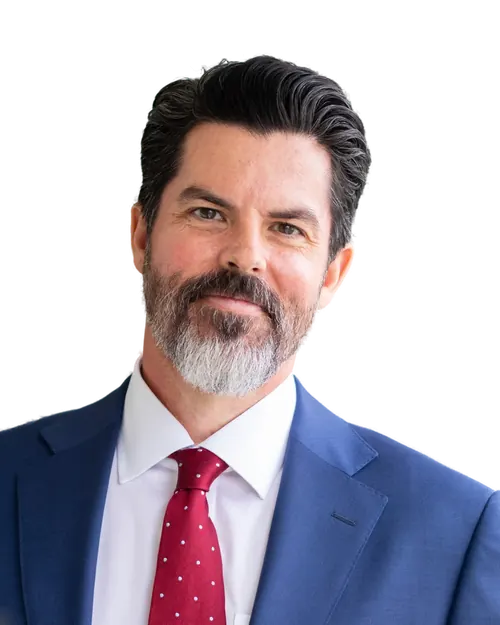
David Gammill is a California trial lawyer who served seven years as a Los Angeles County Deputy District Attorney and has tried more than 100 cases to verdict. He represents injured people in the South Bay and across Los Angeles County. State Bar of California No. 258286.
An expert challenge that could end the case? Gammill Law accepts trial referrals and co-counsel arrangements from other attorneys. See For Attorneys, contact us, or call 310-750-4149.
This page is general information for lawyers, not legal advice, and it does not create an attorney-client relationship. Verify all authority independently before relying on it in any filing.
Free Case Review 1
This site is protected by reCAPTCHA and the Google Privacy Policy and Terms of Service apply.
