

GET A FREE CONSULTATION
310-750-4149
$100,000,000+
Recovered for Clients
$21,100,000
Wrongful Death VERDICT
$16,000,000
School Sexual Abuse VERDICT
$12,000,000
Whistleblower Retaliation VERDICT
Evidence Code section 352 lets a California trial judge exclude relevant evidence when its probative value is substantially outweighed by the probability that admitting it will consume undue time or create a substantial danger of undue prejudice, confusion of the issues, or misleading the jury. Prejudice under section 352 means evidence that leads jurors to prejudge a person or a cause on something other than the issues. Evidence that simply hurts the other side does not qualify.
Evidence Code section 352 reads in full:
“The court in its discretion may exclude evidence if its probative value is substantially outweighed by the probability that its admission will (a) necessitate undue consumption of time or (b) create substantial danger of undue prejudice, of confusing the issues, or of misleading the jury.”
The baseline is section 351: “Except as otherwise provided by statute, all relevant evidence is admissible.” Section 352 is one of the statutes that provides otherwise, and its wording leans toward admission at each step: the probative value must be “substantially” outweighed, by a “probability,” of a “substantial danger,” of prejudice that is “undue.”
The prejudice section 352 guards against “is not the prejudice or damage to a defense that naturally flows from relevant, highly probative evidence.” It “applies to evidence which uniquely tends to evoke an emotional bias against the defendant as an individual and which has very little effect on the issues. In applying section 352, ‘prejudicial’ is not synonymous with ‘damaging.'” (People v. Karis (1988) 46 Cal.3d 612, 638.) The statute uses the word “in its etymological sense of ‘prejudging’ a person or cause on the basis of extraneous factors.” (Doolin, 45 Cal.4th at p. 439.)
The same definition governs civil trials. In Vorse v. Sarasy the Court of Appeal reversed a civil judgment because the trial judge struck a witness’s testimony under section 352 on a wrong idea of prejudice. The judge had focused on the fact that the testimony hurt one side. “That is what opposing evidence is generally supposed to do.” Evidence is unduly prejudicial when it will “inflame the emotions of the jury, motivating them to use the information, not to logically evaluate the point upon which it is relevant, but to reward or punish one side because of the jurors’ emotional reaction.” (53 Cal.App.4th at p. 1009.)
So the argument has to say what the jury will do with the evidence that it is not allowed to do: punish a plaintiff for a record, discount a life because of a gang label, or decide the case on who can afford the judgment.
A 352 ruling “must not be disturbed on appeal except on a showing that the court exercised its discretion in an arbitrary, capricious or patently absurd manner that resulted in a manifest miscarriage of justice.” (People v. Rodrigues (1994) 8 Cal.4th 1060, 1124-1125.) The judge “need not expressly weigh prejudice against probative value, or even expressly state it has done so. All that is required is that the record demonstrate the trial court understood and fulfilled its responsibilities under Evidence Code section 352.” (People v. Williams (1997) 16 Cal.4th 153, 213.)
That standard protects a judge who weighed. It does not protect one who did not, and the reversals in the cases fall into three groups:
The practical point runs both ways. If you win the ruling, a record that shows the judge looked at the evidence and considered the alternatives is what holds it on appeal. If you lose, the absence of that record is your best issue.
Preservation is statutory. Against evidence that came in, section 353 requires a timely objection “so stated as to make clear the specific ground.” In Williams, a relevance objection to gang paraphernalia waived the 352 claim (16 Cal.4th at p. 250). Against an exclusion, section 354 requires that “the substance, purpose, and relevance of the excluded evidence was made known to the court by the questions asked, an offer of proof, or by any other means.”
| Evidence | Best argument to exclude | Best argument to admit | Authority |
|---|---|---|---|
| Graphic injury or autopsy photographs | The injury is undisputed, testimony covers it, and more photographs add only shock. | Photographs are not excluded as cumulative just because a witness described the same facts. They corroborate and clarify the testimony. Offer a selected set. | People v. Scheid (1997) 16 Cal.4th 1, 18-19 (a criminal case; the general rule on photographs) |
| Day-in-the-life video | Staged, selective, and cumulative of the care witnesses. | It shows daily care needs in a way testimony cannot. The judge previews it, and the plaintiff and the care witness can be cross-examined. | Jones v. City of Los Angeles (1993) 20 Cal.App.4th 436, 445 (Court of Appeal; 20-minute film admitted) |
| Prior accidents | Offered to suggest an accident-prone plaintiff, a prior accident is propensity evidence whose “probative force” is “too slight to overbear the dangers of prejudice, distraction by side issues, and unfair surprise.” | A prior accident is admissible to show that a present physical condition had an earlier cause, when the plaintiff claims that condition in this case. | Downing v. Barrett Mobile Home Transport, Inc. (1974) 38 Cal.App.3d 519, 524-525 (Court of Appeal; judgment reversed) |
| Criminal history of a party or witness | Section 787 bars specific instances of conduct offered only to show a character trait bearing on credibility. A felony still gets 352 balancing on a timely, specific objection. | Section 788 allows felony impeachment. In a civil case the felony need not involve moral turpitude. | Robbins v. Wong (1994) 27 Cal.App.4th 261, 264, 274 (Court of Appeal) |
| Immigration status | In “a civil action for personal injury or wrongful death, evidence of a person’s immigration status shall not be admitted into evidence, nor shall discovery into a person’s immigration status be permitted.” No weighing is involved. | Only the statutes listed in section 351.2(b) are carved out. | Evid. Code, § 351.2; Velasquez v. Centrome, Inc. (2015) 233 Cal.App.4th 1191, 1213-1215 (decided before the statute; disclosure in voir dire required reversal) |
| Wealth or poverty | Liability and damages are decided “without regard to the defendant’s ability to pay any judgment.” An admonition may not cure the reference. | Financial condition comes in on punitive damages, and on the defendant’s application only after a verdict awarding actual damages and finding malice, oppression or fraud. | Hoffman v. Brandt (1966) 65 Cal.2d 549, 552-554; Civ. Code, § 3295, subd. (d) |
| Liability insurance | Inadmissible “to prove negligence or other wrongdoing.” Offered for anything else, the risk is that jurors decide on who pays. | Section 1155 does not address other purposes, such as a witness’s tie to the insurer. That leaves the question to relevance and 352. | Evid. Code, § 1155 |
| Collateral source payments, offered to show malingering | The prejudice “varies little from case to case,” and even with a cautionary instruction there is “substantial danger” jurors will use the payments to cut damages. | Only on “a persuasive showing” of “substantial probative value”: a strong inference that the benefits, and not the injury, are keeping the plaintiff off work. | Hrnjak, 4 Cal.3d at pp. 732-733; see medical damages evidence after Howell |
| Cumulative experts | A second expert on the same opinion is undue consumption of time, and the court “may, at any time before or during the trial,” limit the number of experts. | Each expert covers a different specialty or a different link in causation. | Evid. Code, § 352, subd. (a); § 723 |
Subsequent remedial measures (§ 1151) and offers to compromise (§ 1152) follow the pattern of section 1155: the statute bars one use, and 352 is the fight over the others.
The defense in a force case wants the jury to know who the plaintiff or decedent was: the record, the drugs, the gang. The 352 answer starts with what the jury is deciding.
California now states the standard by statute. Penal Code section 835a, subdivision (a)(4), provides that an officer’s decision to use force “shall be evaluated from the perspective of a reasonable officer in the same situation, based on the totality of the circumstances known to or perceived by the officer at the time, rather than with the benefit of hindsight.” Subdivision (e)(3) defines the totality of the circumstances as “all facts known to the peace officer at the time, including the conduct of the officer and the subject leading up to the use of deadly force.”
The case law runs the same way. For negligence, “[t]he reasonableness of an officer’s conduct is determined in light of the totality of circumstances,” and that includes the officer’s own tactical conduct before the shooting. (Hayes v. County of San Diego (2013) 57 Cal.4th 622, 629, 632.) Hayes also confirms that state negligence law is broader than Fourth Amendment law, “which tends to focus more narrowly on the moment when deadly force is used.” (Id. at p. 639.) For battery, the plaintiff must prove unreasonable force, judged on “the facts and circumstances confronting” the officer. (Brown v. Ransweiler (2009) 171 Cal.App.4th 516, 527 [Court of Appeal]; see Graham v. Connor (1989) 490 U.S. 386, 396-397.)
From there the argument is short. A conviction, a toxicology result or a gang tie the officer did not know about is not among the “facts known to the peace officer at the time.” Its probative value on liability is slight, and what it invites is the prejudging that section 352 exists to prevent. In state court that is an argument built from the statute and Hayes, not a holding. The reported decisions that apply it to this kind of evidence are from the Ninth Circuit:
They are separate gates, and the evidence must pass both. Section 1101(a) bars character evidence, including “specific instances of his or her conduct,” when “offered to prove his or her conduct on a specified occasion.” Subdivision (b) allows “a crime, civil wrong, or other act” to prove a fact such as motive, intent, plan, knowledge, identity or absence of mistake or accident. Subdivision (c) leaves credibility evidence to its own rules.
Passing section 1101(b) “does not end our inquiry.” (People v. Ewoldt (1994) 7 Cal.4th 380, 404.) The evidence must also clear section 352, and the main factor on the probative side is how strongly the other act proves the permitted fact. Ewoldt sets the similarity scale: least for intent, more for common plan, most for identity (id. at pp. 402-403). It is a criminal case about uncharged crimes. In a civil trial, cite it for the two-step structure, then argue similarity, remoteness and the time each incident takes to try. Andrews shows the civil application: the incidents went to intent, which was “a central issue in the case,” and the time concern was answered by limiting witnesses, not by excluding everything.
Move in limine when the harm is in the mention. The reason for the motion is “to avoid the obviously futile attempt to ‘unring the bell.'” (Kelly v. New West Federal Savings (1996) 49 Cal.App.4th 659, 669-670.) Immigration status, a criminal record, gang ties and insurance are the clear cases: an objection sustained after the jury has heard the question does little. Hoffman and Hrnjak both say an admonition or limiting instruction does not reliably cure this kind of evidence, and in Velasquez the damage was done in voir dire.
Object at trial when the weight depends on how the testimony comes in. A pretrial motion preserves the objection only when “(1) a specific legal ground for exclusion is advanced and subsequently raised on appeal; (2) the motion is directed to a particular, identifiable body of evidence; and (3) the motion is made at a time before or during trial when the trial judge can determine the evidentiary question in its appropriate context.” (People v. Morris (1991) 53 Cal.3d 152, 190, disapproved on another ground in People v. Stansbury (1995) 9 Cal.4th 824, 830, fn. 1.) Morris warns that actual testimony “sometimes defies pretrial predictions,” and that events at trial can change the context enough to require a renewed objection (id. at pp. 189-190). The court called it the better practice to have the judge state whether a further objection is wanted. A motion against a category, such as “any testimony of the plaintiffs which is speculative,” gives the judge nothing to weigh and asks the court “to rule in a vacuum.” (Kelly, 49 Cal.App.4th at p. 670.)
Treat a pretrial ruling as provisional. In Andrews the judge excluded the other incidents before trial and said the ruling would change if the defense opened the door. The officer then testified that he was patient with arrestees as a general rule. The exclusion stayed in place after that testimony, and the judgment was reversed. Whichever side you are on, when the testimony shifts, raise 352 again on the spot.
Frame probative value by the disputed issue. The strongest exclusion arguments in the cases show that the evidence goes to something not in dispute or not in the case: immigration status where no lost earnings were claimed (Velasquez), a prior accident where the plaintiff was not claiming the earlier condition (Downing), gang and drug evidence on a liability question that turned on what the officer faced (Diaz). The strongest admission arguments tie the evidence to the contested issue: intent in Andrews, the extent of daily care needs in Jones. For categories the courts treat as inherently prejudicial, “bare relevance” is not enough, and the proponent needs “substantial probative value” (Hrnjak, 4 Cal.3d at pp. 732-733).
Frame prejudice as a misuse, and answer it with a narrower offer. If you are objecting, name the improper inference. If you are the proponent, the cases reward a trimmed offer: a film the judge has previewed, with the witnesses available for cross-examination (Jones); a limited number of incidents and witnesses (Andrews); a stipulation in place of expert testimony (Diaz). A judge who has been given a narrower alternative and has looked at the evidence has made the record Williams requires.
| Point | California | Federal |
|---|---|---|
| Standard | § 352: “substantially outweighed by the probability” of “substantial danger of undue prejudice.” | Rule 403: “substantially outweighed by a danger of” “unfair prejudice.” |
| Time and repetition | “Undue consumption of time.” Cumulative evidence is not named; experts can be capped under § 723. | “Undue delay, wasting time, or needlessly presenting cumulative evidence.” |
| Other acts | § 1101(b), then § 352. | Rule 404(b), then Rule 403. |
| Felony impeachment in a civil case | § 788, with § 352 balancing on objection (Robbins). The text of § 788 has no time limit. | Rule 609(a)(1)(A): “must be admitted, subject to Rule 403.” After 10 years, Rule 609(b) admits the conviction only if its probative value “substantially outweighs its prejudicial effect.” |
| Liability insurance | § 1155: that a person “was” insured is inadmissible to prove negligence or wrongdoing. Other purposes are not addressed. | Rule 411: “was or was not insured.” Other purposes, “such as proving a witness’s bias or prejudice or proving agency, ownership, or control,” are expressly allowed. |
| Review | Abuse of discretion (Rodrigues). | Abuse of discretion, and the error must be prejudicial (Boyd, 576 F.3d at p. 949). |
More foundations and objections are collected in the California Evidence Code guide for trial lawyers.
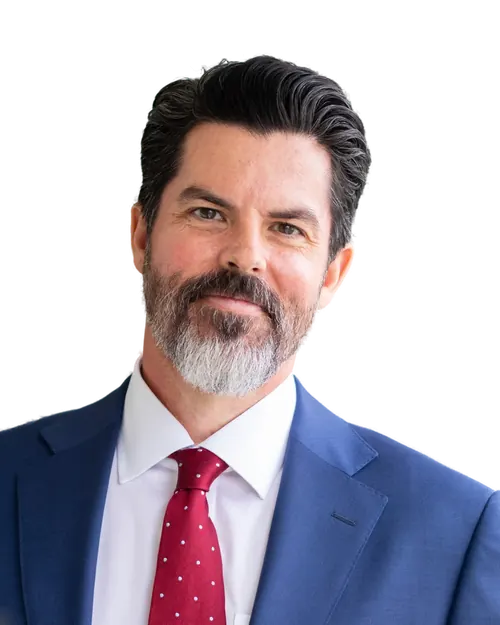
David Gammill is a California trial lawyer who served seven years as a Los Angeles County Deputy District Attorney and has tried more than 100 cases to verdict. He represents injured people in the South Bay and across Los Angeles County. State Bar of California No. 258286.
A motion in limine that could decide your trial? Gammill Law accepts trial referrals and co-counsel arrangements from other attorneys. See For Attorneys, contact us, or call 310-750-4149.
This page is general information for lawyers, not legal advice, and it does not create an attorney-client relationship. Verify all authority independently before relying on it in any filing.
Free Case Review 1
This site is protected by reCAPTCHA and the Google Privacy Policy and Terms of Service apply.
