

GET A FREE CONSULTATION
310-750-4149
$100,000,000+
Recovered for Clients
$21,100,000
Wrongful Death VERDICT
$16,000,000
School Sexual Abuse VERDICT
$12,000,000
Whistleblower Retaliation VERDICT
In a California civil trial, a settlement offer is inadmissible to prove liability (Evidence Code section 1152), and a plaintiff’s offer to take less is inadmissible to prove the claim is invalid (section 1154). Both sections also cover conduct and statements made in negotiating the offer, and both are limited to that purpose: the same evidence can come in to show bias, bad-faith claims handling, or the weakness of a different claim. Mediation is different. Under section 1119, what is said or written for a mediation is inadmissible and undiscoverable in a later civil case for any purpose, and the California Supreme Court has refused to create exceptions.
Subdivision (a) of Evidence Code section 1152 reads:
“Evidence that a person has, in compromise or from humanitarian motives, furnished or offered or promised to furnish money or any other thing, act, or service to another who has sustained or will sustain or claims that he or she has sustained or will sustain loss or damage, as well as any conduct or statements made in negotiation thereof, is inadmissible to prove his or her liability for the loss or damage or any part of it.”
Section 1154 is the mirror image for the claimant:
“Evidence that a person has accepted or offered or promised to accept a sum of money or any other thing, act, or service in satisfaction of a claim, as well as any conduct or statements made in negotiation thereof, is inadmissible to prove the invalidity of the claim or any part of it.”
No existing dispute is required. Section 1152, unlike Federal Rule 408, “does not require the preexistence of a dispute, and expressly applies to a prospective loss.” (Mangano v. Verity, Inc. (2009) 179 Cal.App.4th 217, 223, a Court of Appeal decision.)
Yes. Sections 1152 and 1154 “are not absolute bars to admissibility, since a settlement document may be admissible for a purpose other than proving liability.” (Volkswagen, supra, 139 Cal.App.4th at p. 1491.) The purposes that recur in injury and civil rights trials:
Statements with no connection to a compromise are ordinary party admissions. A defendant’s remark that he would help with the injured person’s medical bills, made outside any negotiation, was not an offer of compromise. (People v. Muniz (1989) 213 Cal.App.3d 1508, 1515-1516, disapproved on another ground in People v. Escobar (1992) 3 Cal.4th 740.) For statements by employees and agents, see authorized admissions under sections 1222 to 1224. The line between “connected” and “independent” statements is drawn “in light of the strong policy in favor of promoting candor during settlement negotiations.” (Caira v. Offner (2005) 126 Cal.App.4th 12, 36.)
Discovery is a separate question. The two sections are “directed at the admissibility of evidence, not its discovery.” (Volkswagen, supra, 139 Cal.App.4th at p. 1491.) The same opinion contrasts section 1119, which says mediation evidence is not “admissible or subject to discovery.” A request for the other side’s settlement communications is therefore resisted on relevance, not on section 1152.
Not under the text of either statute. Section 1152 reaches money, things, acts or services furnished “from humanitarian motives,” not only offers made in compromise, so on its face it covers a defendant or insurer who pays an ambulance bill or a rental car before anyone has discussed settlement. Insurance Code section 11583 adds that no advance or partial payment of damages by a person or liability insurer, made “as an accommodation to an injured person,” “shall be construed as an admission of liability.” Two more parts of section 11583 matter to plaintiffs. The payment is a credit against any later settlement or judgment that does not expressly account for it. And the payer must give written notice of the statute of limitations, including public-entity claim deadlines, when payment begins. Failure to give it tolls the deadline until notice is given. No notice is required if the recipient has a lawyer.
Apologies fall under section 1160. The portion of a statement “expressing sympathy or a general sense of benevolence” after an accident is inadmissible as an admission of liability, but “a statement of fault … shall not be inadmissible pursuant to this section.” So “I am sorry you were hurt, and we will cover the ambulance” stays out. “I ran the light” stays out only if it was said in negotiating a compromise.
No. Under Code of Civil Procedure section 998, subdivision (b)(2), an offer not accepted “shall be deemed withdrawn, and cannot be given in evidence upon the trial or arbitration.” The Supreme Court gives sections 998 and 1152 “a parallel construction”: both bar the offer to prove liability on the claim it proposed to compromise and “permit its introduction to prove some other matter at issue.” (White, supra, 40 Cal.3d at pp. 888-889.) The offer is not evidence at trial. Its use comes after verdict, under the statute itself: if the offeree “fails to obtain a more favorable judgment or award,” subdivisions (c) through (e) shift post-offer costs and allow the court to award post-offer expert witness fees, which the court decides by comparing the offer with the result. Drafting and timing are covered in the section 998 guide.
Section 1119 reads:
“Except as otherwise provided in this chapter: (a) No evidence of anything said or any admission made for the purpose of, in the course of, or pursuant to, a mediation or a mediation consultation is admissible or subject to discovery, and disclosure of the evidence shall not be compelled, in any arbitration, administrative adjudication, civil action, or other noncriminal proceeding in which, pursuant to law, testimony can be compelled to be given. (b) No writing, as defined in Section 250, that is prepared for the purpose of, in the course of, or pursuant to, a mediation or a mediation consultation, is admissible or subject to discovery, and disclosure of the writing shall not be compelled, in any arbitration, administrative adjudication, civil action, or other noncriminal proceeding in which, pursuant to law, testimony can be compelled to be given. (c) All communications, negotiations, or settlement discussions by and between participants in the course of a mediation or a mediation consultation shall remain confidential.”
There is no purpose limit. The section bars discovery as well as admission, and it covers anything said or written for the mediation, offer or not.
Only the ones in the chapter. Five Supreme Court decisions say so.
The due process reference traces to Rinaker v. Superior Court (1998) 62 Cal.App.4th 155, where juveniles in a delinquency proceeding sought a mediator’s testimony to impeach their accuser. Foxgate called it “clearly distinguishable.” (Foxgate, supra, 26 Cal.4th at p. 15.) Foxgate found no comparable due process right in a civil party’s wish to use mediation evidence on a sanctions motion.
The statutory limits a trial lawyer uses:
Mediation briefs “epitomize” protected writings, and emails sent the day before a mediation that quoted the brief were protected too. But a conversation is not protected merely because a mediation is on calendar. The party claiming protection has the burden, and the court considers “the timing, context, and content of the communication.” (Wimsatt v. Superior Court (2007) 152 Cal.App.4th 137, 158-160, a Court of Appeal decision.)
Section 1129 was added by Statutes 2018, chapter 350 (Sen. Bill No. 954). Since January 1, 2019, a lawyer must, “as soon as reasonably possible before the client agrees to participate,” give the client a printed disclosure of the section 1119 restrictions and obtain a signed acknowledgment. It must be in the client’s preferred language, in at least 12-point font, on a single page not attached to anything else, and signed and dated by lawyer and client. Subdivision (d) supplies safe-harbor wording, which tells the client that communications with the lawyer in preparation for or during a mediation cannot be used “even if you later decide to sue your attorney for malpractice because of something that happens during the mediation.” That is Cassel put in writing for the client. Class and representative actions are exempt. Noncompliance “is not a basis to set aside an agreement” reached in the mediation, but section 1122, subdivision (a)(3) allows the disclosure to be used in an attorney disciplinary proceeding.
| Item | At the injury trial | Where it can be used |
|---|---|---|
| Section 998 offer and cover letter | Out. CCP § 998(b)(2); §§ 1152, 1154. | Post-verdict costs; a later bad-faith action (White). |
| Plaintiff’s demand offering to settle for a sum | Out to prove the claim invalid or worth less. § 1154. | A different claim (Zhou). |
| Letter that only itemizes and demands full payment | Not a compromise offer (Zhou). | |
| Adjuster’s offer and negotiation statements | Out to prove liability. § 1152(a). | Bad-faith action; § 1152(b) then opens the other offers. |
| Medical or advance payment | Out as an admission. § 1152(a); Ins. Code § 11583. | Credit against the judgment. |
| Apology with an offer to pay bills | Out. §§ 1160, 1152. | |
| “It was my fault,” outside any negotiation | In. § 1160(a). | |
| Mediation brief | Out and not discoverable. § 1119(b); Wimsatt. | Only by express agreement. § 1122. |
| Preexisting records attached to the brief | In if otherwise admissible. § 1120(a). | |
| Signed mediated agreement stating it is binding | In to enforce it. § 1123(b); Fair. | |
| Settlement with a codefendant who testifies | In for bias, with a limiting instruction (Diamond). |
| Point | California | Federal |
|---|---|---|
| Barred purpose | Liability for the loss (§ 1152); invalidity of the claim (§ 1154). | To “prove or disprove the validity or amount of a disputed claim.” |
| Impeachment | No express text. C & K Engineering upheld exclusion of a negotiation statement offered to impeach. | Expressly barred: no use “to impeach by a prior inconsistent statement or a contradiction.” |
| Existing dispute | Not required (Mangano). | The claim must be “disputed.” |
| Humanitarian payments | Inside § 1152, with conduct and statements in negotiating them. | Rule 409: “medical, hospital, or similar expenses” only, with no clause covering statements. |
| Other purposes | Case law: bias, bad faith, a different claim. | Rule 408(b): “a witness’s bias or prejudice, negating a contention of undue delay,” obstruction. |
| Mediation | § 1119, statutory exceptions only. | Nothing in Rule 408. In a section 1983 case with state claims, “federal privilege law governs,” and the Ninth Circuit left open whether a federal mediation privilege exists. (Wilcox v. Arpaio (9th Cir. 2014) 753 F.3d 872, 876-877.) The court later reversed a ruling that had applied section 1123, subdivision (b) to a mediated settlement of federal and state claims, even though only state claims remained by the time of the ruling. (In re TFT-LCD (Flat Panel) Antitrust Litigation (9th Cir. 2016) 835 F.3d 1155, 1158-1159.) |
A codefendant’s settlement. The settling parties argue that the jury will read the settlement as an admission, which is the use section 1152 forbids, and that section 352 favors keeping it out. The remaining defendant argues Diamond: the evidence goes to bias and realigned interests, not liability, and a limiting instruction answers the prejudice. When the settling party will testify or stay in the courtroom as a party, Diamond is the stronger position, and a plaintiff who settles with one defendant mid-case should plan the trial on the assumption that the jury will hear about it.
The plaintiff’s demand letter. The defense wants the letter’s description of the injuries, or its number, in front of the jury as a party admission. The plaintiff’s argument is section 1154 and C & K Engineering: the statute covers statements made in negotiating the demand, and the letter is being offered to prove part of the claim invalid. The defense’s best reply is Zhou: the statement is independent of any offer, or it concerns a different claim from the one being tried. The practical lesson for plaintiffs is that a letter drafted as a pure itemized bill gets less protection than one that proposes a compromise.
Negotiation statements offered for a non-liability purpose. The proponent names bias, notice, or bad faith. The opponent’s argument is that the stated purpose is a label, and that the only real inference runs through liability or the weakness of the claim. Mangano shows why the purpose has to be pinned down: an exclusion “for purposes of establishing liability” leaves other uses open. (Mangano, supra, 179 Cal.App.4th at pp. 223-224.)
Something that surfaced at mediation. Sections 1119 and 1128 keep the mediation itself out of the trial. The real dispute is usually a document or a fact one side first saw there. The party resisting argues it was “prepared for the purpose of” the mediation. The party offering it argues section 1120: it existed apart from the mediation and was only used there. Rojas draws the line between the writing prepared for mediation, which is protected, and the underlying facts and physical evidence, which are not.
More trial rules are in the California Evidence Code guide.
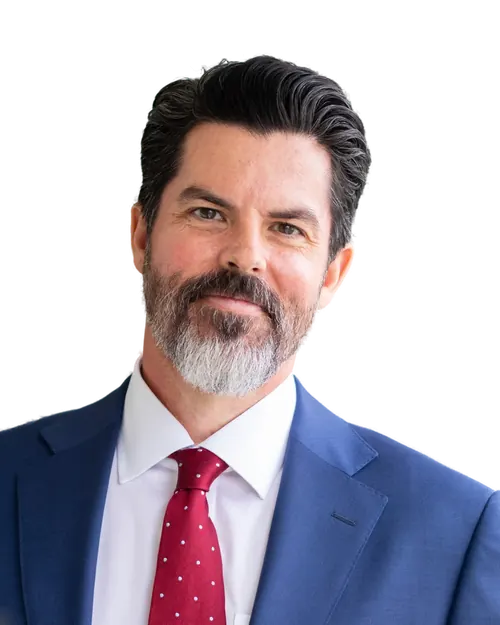
David Gammill is a California trial lawyer who served seven years as a Los Angeles County Deputy District Attorney and has tried more than 100 cases to verdict. He represents injured people in the South Bay and across Los Angeles County. State Bar of California No. 258286.
A settlement or mediation question heading into trial? Gammill Law accepts trial referrals and co-counsel arrangements from other attorneys. See For Attorneys, contact us, or call 310-750-4149.
This page is general information for lawyers, not legal advice, and it does not create an attorney-client relationship. Verify all authority independently before relying on it in any filing.
Free Case Review 1
This site is protected by reCAPTCHA and the Google Privacy Policy and Terms of Service apply.
