

GET A FREE CONSULTATION
310-750-4149
$100,000,000+
Recovered for Clients
$21,100,000
Wrongful Death VERDICT
$16,000,000
School Sexual Abuse VERDICT
$12,000,000
Whistleblower Retaliation VERDICT
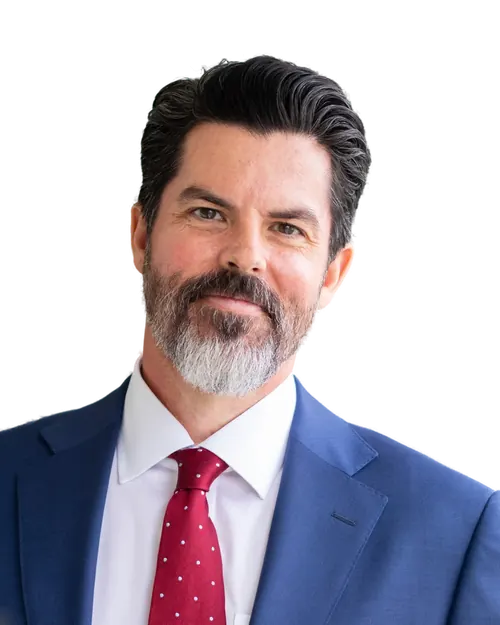
Reviewed by David Gammill, California trial attorney · Last reviewed: October 21, 2026
If you were hurt in a car crash in Burbank that another driver caused, California law lets you recover your medical bills, lost income, vehicle damage, and pain and suffering, and it puts a deadline on doing it. Gammill Law Accident & Injury Lawyers is a South Bay trial firm that represents people hurt in crashes in Burbank and across Los Angeles County. The firm has recovered more than $100 million for California clients across verdicts and settlements. Its results include a $21.1 million wrongful death verdict, a $16 million school sexual abuse verdict, and a $12 million whistleblower retaliation verdict; every case is different, and prior results do not guarantee a similar outcome.
Call now or keep reading. The sections below explain where Burbank crashes happen, what to do first, the deadlines that control your case, and how a claim is valued.
Burbank is split in two by its freeways, and that split decides who holds your report. The Golden State Freeway, I-5, and the Ventura Freeway, SR-134, are state highways: a crash on either, or on their ramps, is a Highway Patrol report, and Caltrans is the public entity if the road itself was part of the problem. Every other street in the city, Glenoaks Boulevard, Victory Boulevard, Alameda Avenue, Olive Avenue, Magnolia Boulevard, Hollywood Way and Buena Vista Street among them, is a City street: the Burbank Police Department writes the report, and the City of Burbank is the public entity for the street, its signals and its crosswalks. The state crash database, which counts every crash any agency reports inside the city, shows how much of Burbank’s crash picture is freeway: 984 crashes were reported in Burbank in 2024, up from 921 in 2023, with the people injured rising from 786 to 893 and the deaths from three to five, and the two busiest single locations in the city were the I-5 interchanges at Burbank Boulevard, with 51 crashes, and at Buena Vista Street, with 44. That does not make any one place responsible for a crash. It does decide which agency holds your report.
The City’s own Safer Streets Burbank Action Plan, adopted in May 2026, counts the surface streets for 2018 through 2022: 2,123 injury collisions on City streets in five years, 105 of them killing or severely injuring someone, 15 of them fatal. Eighty percent of the severe and fatal crashes happened on 16 percent of the street network, and the plan names the corridors. Glenoaks Boulevard between Cypress Avenue and Olive Avenue, four-tenths of a mile, had 59 injury collisions and six severe or fatal ones, with traffic typically moving at 34 to 37 miles per hour in a 30 zone. Victory Boulevard between Burbank Boulevard and Providencia Avenue, 1.2 miles carrying 23,000 to 27,000 vehicles a day, had 90 injury collisions and five severe or fatal ones. The newest state data says the same streets lead: in 2024, Glenoaks had more crash injuries than any other surface street in Burbank, with 68, followed by Alameda Avenue with 63 and Victory with 62. That does not make any one place responsible for a crash. It does mean a crash on one of those streets often has a history in the City’s own files, and that history is evidence.
Three patterns matter for a Burbank case. The first is the intersection: 91 percent of the city’s injury collisions happened at an intersection, most often a signalized one, and nearly half were broadside, or T-bone, crashes. The second is speed. Ninety-one percent of injury collisions and 86 percent of the severe and fatal ones happened on roads where traffic typically moves at 30 miles per hour or more; streets posted at 30 or above are 22 percent of Burbank’s network and carry 82 percent of its injury crashes. The third is the driver who leaves. By the state database, 205 of the crashes reported in Burbank in 2024, 21 percent, were hit-and-runs, injuring 102 people, and 47 of them were felony hit-and-runs with an injury. Alcohol was coded on 17 percent of the severe and fatal crashes in the City’s study even where it was not listed as the primary cause, and the state’s Office of Traffic Safety ranked Burbank 17th worst of 62 cities its size for people killed or injured in 2023. The City has set a goal of zero severe and fatal crashes by 2035 and won $1,584,000 in federal Safe Streets and Roads for All funding in 2024 to plan for it.
Call 911 and get medical care, even if you feel fine at the scene; adrenaline hides injuries, and a gap in treatment becomes the insurer’s argument later. On a Burbank street the Burbank Police Department writes the report; on the 5 or the 134 it is the Highway Patrol. That report becomes the first document every insurer reads, so make sure it is written and get the report number. Photograph the vehicles, the road, the signals and your injuries. Get the other driver’s license, insurance card and plate, and the names and numbers of witnesses; Burbank streets carry commuters, airport traffic, studio crews and rideshare drivers from everywhere, and a driver who is hard to reach next week is harder to find next year. Say nothing about fault, to the other driver or to anyone’s insurer, and do not give a recorded statement to the other side.
If the other driver left the scene, report it to the police immediately and tell them everything you remember about the car. A driver involved in an injury crash must stop and stay under Vehicle Code § 20001, leaving is a crime, and a prompt police report is usually a condition of the victim’s own uninsured motorist claim, which is often the policy that pays when the driver is never found. And download our free guide, Crash Course: A California Car Accident Guide (2026), to keep every deadline and first step in one place.
Most California car accident lawsuits must be filed within two years of the crash. Under CCP § 335.1, the clock starts the day of the crash, and courts rarely excuse a missed deadline. Our plain-English guide to CCP § 335.1, California’s two-year statute of limitations, covers the rule and its narrow exceptions.
Government cases move much faster. If a City vehicle, a malfunctioning signal, or a dangerous stretch of road played a role, Government Code § 911.2 requires a written claim to the right public entity within six months, before any lawsuit, and the two-year rule does not save a missed claim. In Burbank the entity is Caltrans for the 5 and the 134 and their ramps and the City of Burbank for a City street, a signal or a City vehicle, and LA Metro answers for its own buses. Once an entity rejects the claim, Government Code § 945.6 gives six months from the rejection notice to file suit. Our guide to the California government claim deadline walks through the sequence. We identify the correct entity and file on time.
Where the case is heard. The Los Angeles Superior Court’s own filing locator assigns a Burbank car accident lawsuit to one of four courthouses, the Burbank Courthouse on East Olive Avenue, the Glendale Courthouse, the Pasadena Courthouse or the Alhambra Courthouse; the court assigns the courthouse by where the crash happened, and we confirm it at the first meeting. We have tried a case to verdict in one of them: the firm’s $21.1 million wrongful death verdict, a roadway case against the State of California, was returned by a Burbank jury in July 2021, and at the time it was the largest verdict ever returned at the Burbank Courthouse.
California requires drivers to carry only minimum liability coverage of $30,000 per injured person, $60,000 per accident, and $15,000 for property damage (Vehicle Code § 16451, for policies issued or renewed on or after January 1, 2025). A single emergency room visit can exceed the per-person minimum. The real work in a Burbank car accident case is finding every source of coverage that legally applies: the at-fault driver’s policy, an employer’s policy if that driver was working, a rental company’s coverage if the car was a rental, a rideshare company’s policy if the trip was on the app, and your own uninsured and underinsured motorist coverage. Do not assume the other driver is local or well insured: the 5 and the 134 carry traffic from all over Southern California, the airport fills the city with rental cars and drivers for hire, and when one reported crash in five is a hit-and-run, the driver is often never identified at all. Your own uninsured and underinsured motorist coverage is often the policy that pays; it has strict notice conditions, so get advice early. If the driver who hit you was working for Uber or Lyft, the coverage that applies depends on what the app showed at the moment of the crash, and we obtain that record.
California is a fault state: the driver who caused the crash, and that driver’s insurer, pay for the harm. Fault is proved with evidence: the police report, the physical evidence, the vehicles’ damage patterns, camera footage from City signals and nearby businesses before it is overwritten, and witness statements taken while memories are fresh. We build the case from that evidence before the insurer builds its own version. Speed is where many of these cases are won, because the basic speed law, Vehicle Code § 22350, makes a driver responsible for a speed that was unsafe for the conditions even when it was under the posted limit, and in a city where the City’s own plan measured traffic at 34 to 37 miles per hour in a 30 zone on its worst corridor, that rule does real work. Partial fault does not bar your claim. California follows a pure comparative negligence rule: your recovery is reduced by your percentage of fault, never eliminated by it. Insurers exaggerate your share for exactly that reason, and we push back with evidence. Where a drunk or grossly reckless driver caused the crash, punitive damages may be available on clear and convincing proof under Civil Code § 3294; they are never guaranteed, but they change how an insurer values the claim.
California law allows injured people to recover economic damages, meaning documented losses like emergency care, surgery, therapy, medications, future treatment, lost income, and vehicle repair or replacement, and non-economic damages, meaning the human losses: pain, anxiety, lost sleep, and the activities an injury takes away. When a crash takes a life, California law lets the closest family members bring a claim for their loss, and it has its own rules and deadlines; our wrongful death page explains who can file and what the claim covers. For injuries that did not start in a car, our Burbank personal injury attorney page covers every case type we handle in the city.
Our office is in Torrance, on Del Amo Boulevard at Hawthorne Boulevard, and our attorneys bring more than 40 years of combined legal experience to every case we take. We prepare every case for trial from the first meeting, because insurers price a claim differently when the lawyer across the table will finish the fight in front of a jury.
The firm has recovered more than $100 million for California clients across verdicts and settlements. Separately, its trial results include a $21.1 million wrongful death verdict against the State of California over a highway crash cushion, tried to a jury at the Burbank Courthouse after a $10,000 pre-trial offer; it is a real jury verdict in a specific case, and outcomes always depend on the facts. See our case results.
We work on a contingency fee: nothing upfront, no hourly bills, and a fee only out of the recovery, under a written contingency fee agreement that complies with California law.
Injured and unable to travel? We meet clients at the hospital, at home, or wherever recovery requires. Call 310-750-4149 any time, including nights, weekends, and holidays.
Start with trial experience, because the value an insurer puts on your claim depends on whether your lawyer is ready to try the case. David Gammill has tried over 100 cases to verdict. Every case is different, and past results do not guarantee a similar outcome. Before that, he spent seven years as a Los Angeles County Deputy District Attorney, so he knows how the other side prepares. Two practical questions cut through the rest: will the lawyer who signs you up be the one who handles your case, and can the firm point to real results in cases like yours?
Two years from the crash for most claims, under CCP § 335.1. If a public entity may be responsible, a written claim is due to that entity within six months under Government Code § 911.2, and the two-year rule does not save a missed claim; for a Burbank street, a signal or a City vehicle that claim goes to the City of Burbank, and for the 5 or the 134 it goes to Caltrans. Both guides are linked above.
Yes, in most cases. Report it to the Burbank Police Department right away, because the report is the foundation of everything that follows, and a driver who leaves an injury crash has broken the law by leaving. You are not alone in this: by the state crash database, 205 of the crashes reported in Burbank in 2024 were hit-and-runs. If the police find the driver, the claim runs against that driver’s insurer like any other. If they never do, your own auto policy’s uninsured motorist coverage is usually the policy that pays, and it requires prompt notice and a police report, which is why the report matters so much. Glenoaks and Olive is a place name here, not a cause; the driver’s choice to leave is what changes the case.
The 5 and the 134 are state highways, so the Highway Patrol writes the report, and if a ramp, a barrier, a sign or the road design was part of the problem, the six-month government claim goes to Caltrans, not to the City of Burbank. On every other street in the city it is the reverse: Burbank Police writes the report and the City of Burbank is the entity for the road. The driver’s own liability does not depend on who owns the road, and most cases are ordinary claims against the driver and the available insurance.
Not before you know what your claim is worth. An early offer arrives before your medical picture is complete, and signing a release ends the claim for good, including for injuries that show up later. Have an attorney review the offer against your treatment, your lost income, and the coverage that actually applies; the review is free, and the adjuster’s number rarely survives it.
Nothing upfront and nothing unless we win. We work on a contingency fee, paid only out of the recovery. The written contingency fee agreement linked above sets out the arrangement in detail.
Gammill Law represents people hurt in car crashes in Burbank, from Magnolia Park and the Media District to the Rancho, downtown and the Burbank hills, across the east San Fernando Valley and the foothills, from Glendale, Toluca Lake and North Hollywood to Sun Valley and Pasadena, throughout the City of Los Angeles, and throughout the South Bay, including Torrance, Gardena, Inglewood, Carson, Hawthorne, Lawndale, El Segundo, Hermosa Beach, Manhattan Beach, Redondo Beach, Lomita, and the Palos Verdes Peninsula. For a crash inside the City of Los Angeles, see our Los Angeles car accident lawyer page.
Your free case review includes a real evaluation with an experienced attorney, a clear explanation of your options, and an honest assessment of what your claim is worth. No obligation, and everything you share is confidential.
Get your free case evaluation or call 310-750-4149 now. There are no upfront legal fees; a fee is collected only if we win.
This page is attorney advertising and general information, not legal advice for any specific situation. Deadlines and outcomes are fact-specific; consult a licensed California attorney about your own circumstances. Prior results do not guarantee a similar outcome.
Free Case Review 1
This site is protected by reCAPTCHA and the Google Privacy Policy and Terms of Service apply.
